−62%
Cycle time
Single-cure layered skin
Collapsed a four-stage bonding sequence into one autoclave cure, removing the interlayer adhesive that drove most early delamination failures.
Project Prometheus
A showcase of the research phases, manufacturing breakthroughs, and qualification results behind the program.
Each phase closes with a documented test package before the next one opens.
Screened 47 ceramic-metal layup candidates against thermal shock, abrasion, and delamination criteria. Down-selected to three formulations carried into coupon testing.
Over 1,200 destructive coupon tests across thermal cycling, ballistic impact, and long-duration fatigue. Established the baseline performance envelope for AEGIS-SKIN Mk.I.
Panel and sub-assembly testing against aerospace and defense qualification standards, with instrumented fatigue runs at representative operating loads.
Sensor-instrumented panels deployed to partner platforms for in-service data capture, closing the loop between modelled and observed degradation.
Every entry below is a change to the line, not a lab result — measured against the process it replaced.
Collapsed a four-stage bonding sequence into one autoclave cure, removing the interlayer adhesive that drove most early delamination failures.
Automated fiber placement on curved tooling holds ply alignment inside a fraction of a degree, repeatably, across full production shifts.
Void and inclusion detection moved from post-cure sampling to in-line scanning of every panel, catching defects before they reach assembly.
Reusable modular mold sets replaced part-specific tooling, cutting the fixed cost of introducing a new panel geometry to the line.
Process control on cure temperature and vacuum ramp brought first-pass yield above the threshold required for sustained production rate.
Second production cell qualified and mirrored from the first, giving redundant capacity and a validated path to rate manufacture.
Imagery from qualification testing and the production line, captured under instrumented conditions.
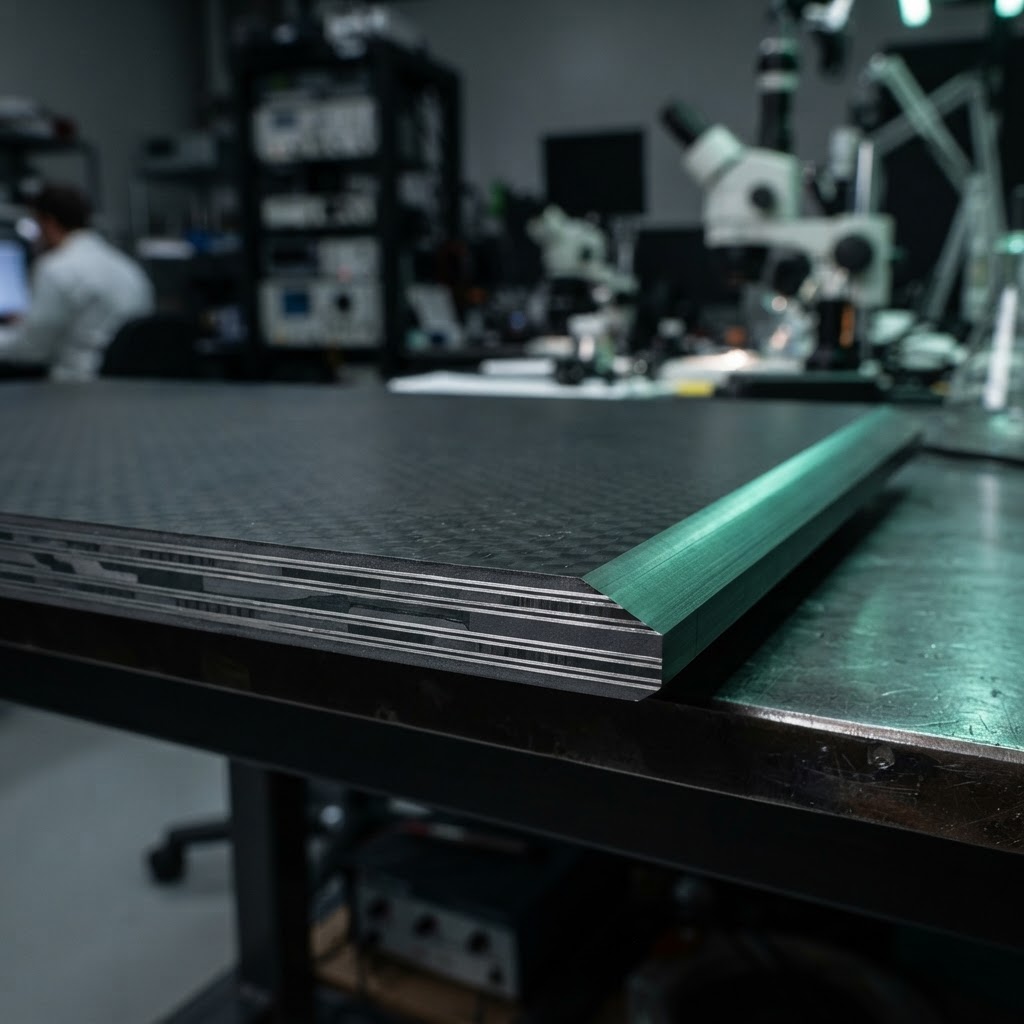 Fig. 1 — Layer integrity
Post-cure cross-section after 400 thermal cycles. No measurable interlayer separation at the bond line.
0 delaminations / 400 cycles
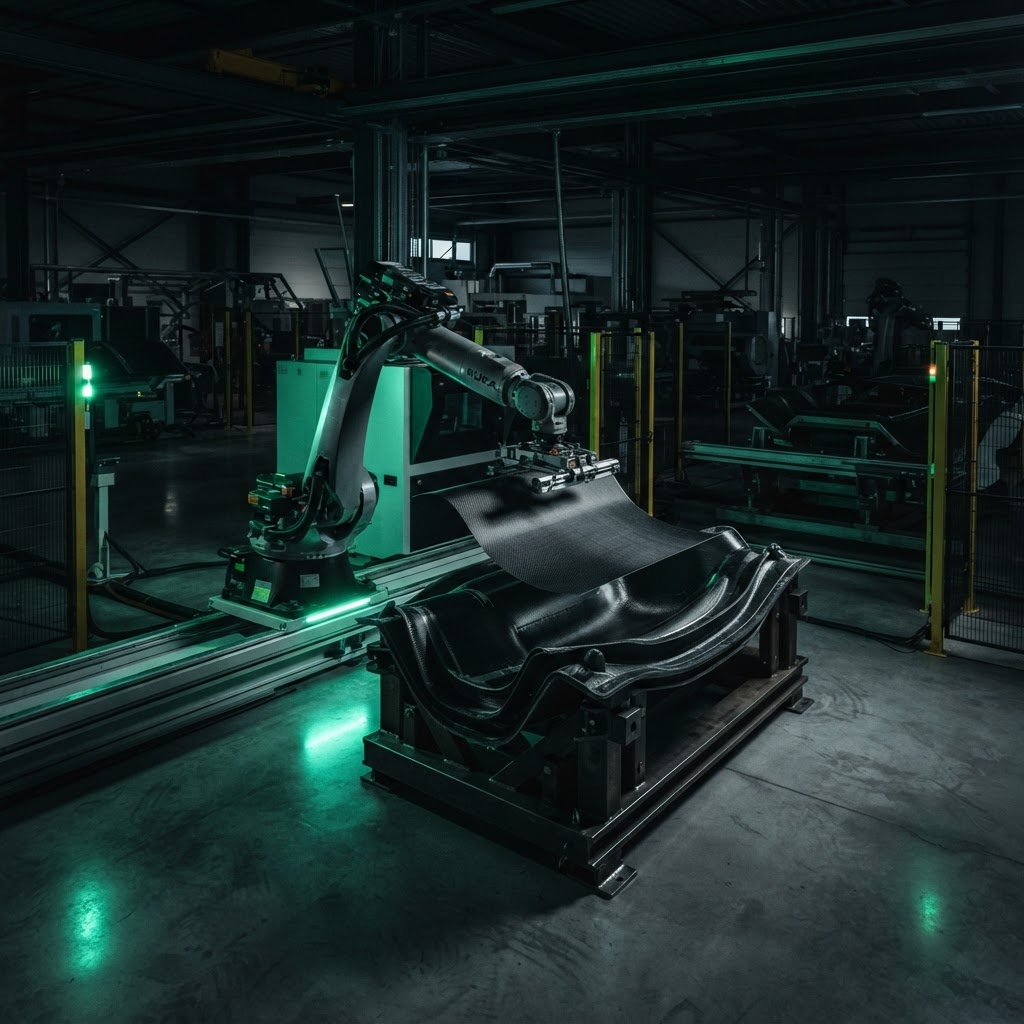 Fig. 2 — Production cell
Qualified robotic layup cell running a full-shift production sequence on curved panel tooling.
94% first-pass yield
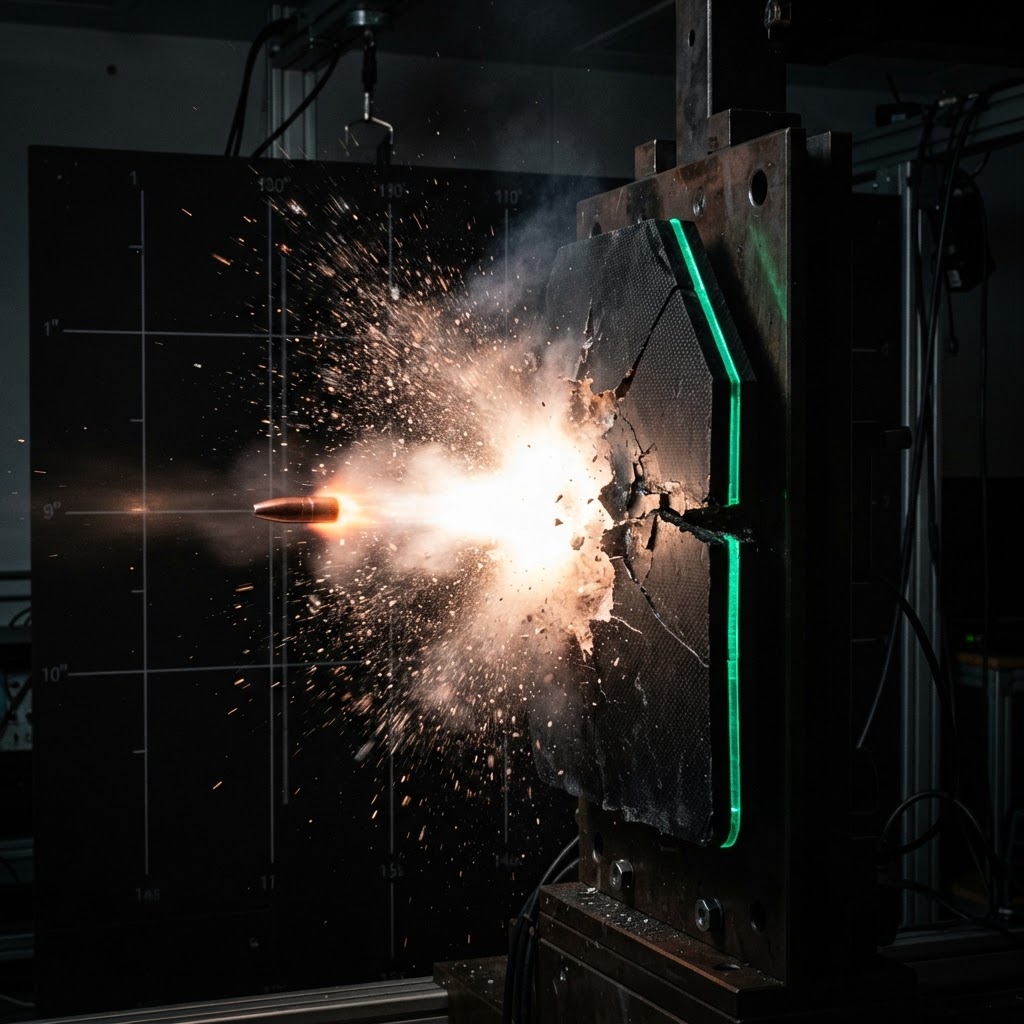 Fig. 3 — Impact response
Instrumented ballistic strike on a production-representative panel. Spall contained within the outer layer.
No through-penetration
COOKIE NOTICE — This site uses essential cookies to operate and analytics cookies to improve performance. By continuing, you consent to our use of cookies in accordance with our privacy policy.